Fifteen times a day off the ladder
An installer was interrupted about fifteen times a day: down the ladder, take the details, call back later, work out a price, type the quote at night. Now customers build their own quote on his website. The work was not automated away. It moved to the only person who already had the answers.
Written by Marc Herdes · Almere, the Netherlands ·
He did not ask for software. He said the phone kept going.
What was the actual problem?
An installer was interrupted about fifteen times a day: down the ladder, take the details, call back later, work out a price, type the quote at night. Now customers build their own quote on his website. The work was not automated away. It moved to the only person who already had the answers.
The company is Warmkoud-Techniek and the system has been running since the spring of 2026. That is the whole set of facts I am prepared to put on a page. What makes it worth telling is not the software. It is the shape of the problem, which turns out to be the same in almost every small business that sells work rather than products.
Why did he climb down fifteen times a day?
Because he was the only one who could answer the question. Somebody rings wanting to know what an installation costs. That question needs the room, the situation and a price, and all three lived in his head. So the drill stops, the ladder gets climbed down, and the details go on a scrap of paper.
Fifteen is not a figure of speech. Some days it was fewer, some days more, and none of the calls were unreasonable on their own. That is the trap. No individual interruption is a problem worth solving, so nothing gets solved, and the day quietly stops belonging to you.
Then the second half. Every one of those calls generates a callback, and the callback generates a price to work out, and the price becomes a document. The document gets typed after dinner, because during the day he was on a ladder.
What did the evenings look like?
Quotes, at the kitchen table, from notes written on site earlier that day. Each one needed a price worked out again, because nothing was written down anywhere except in his head. The evening was not overtime he had chosen. It was the only slot left where the phone was quiet enough to think.
Two things go wrong when quoting happens at night. It gets slower, because you are tired and re-deriving something you already knew that morning. And it gets later: the customer who rang on Monday hears back on Wednesday, by which point somebody quicker has already been round. Nobody ever tells you that is why you lost the job.
What changed?
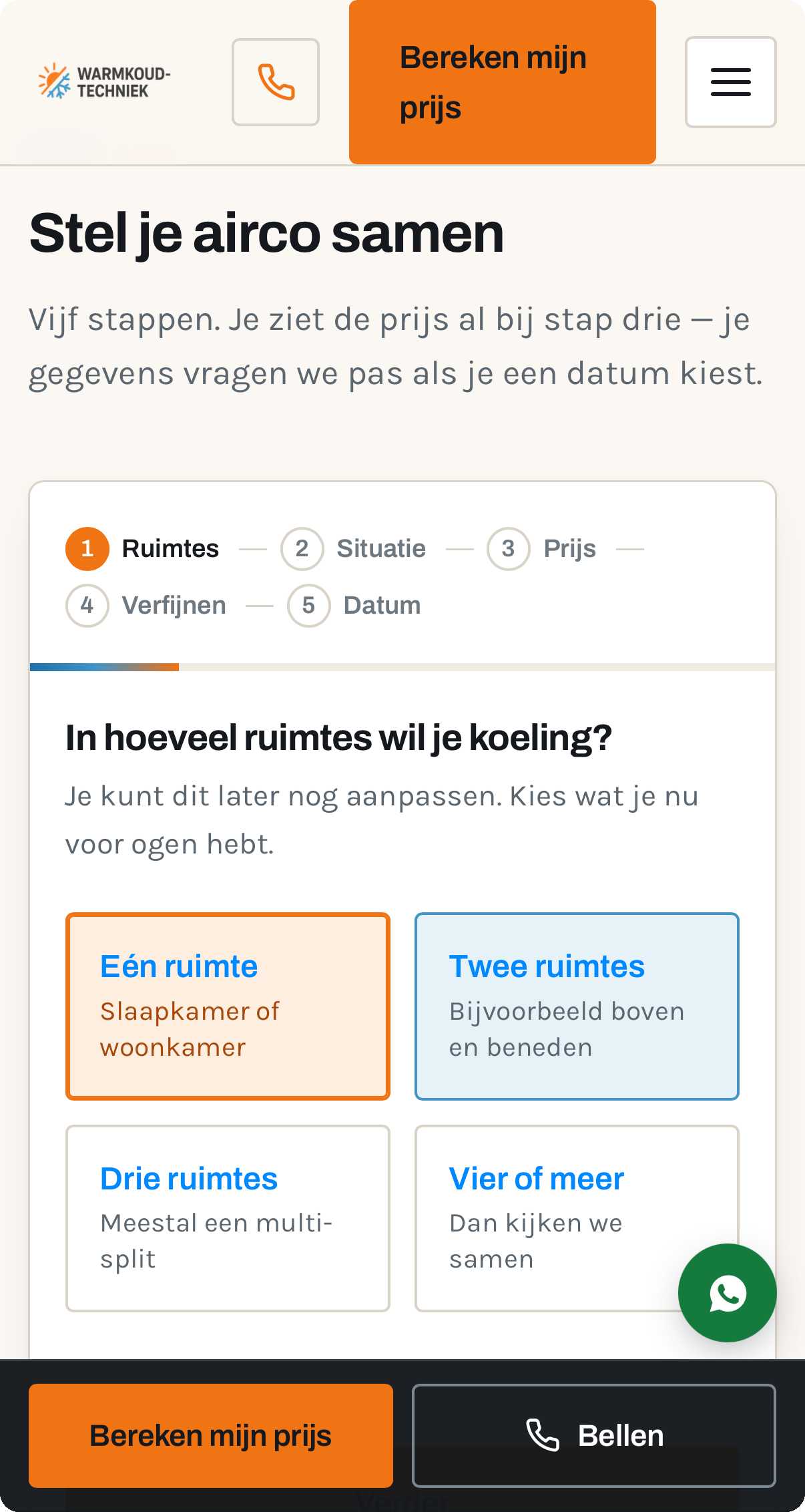
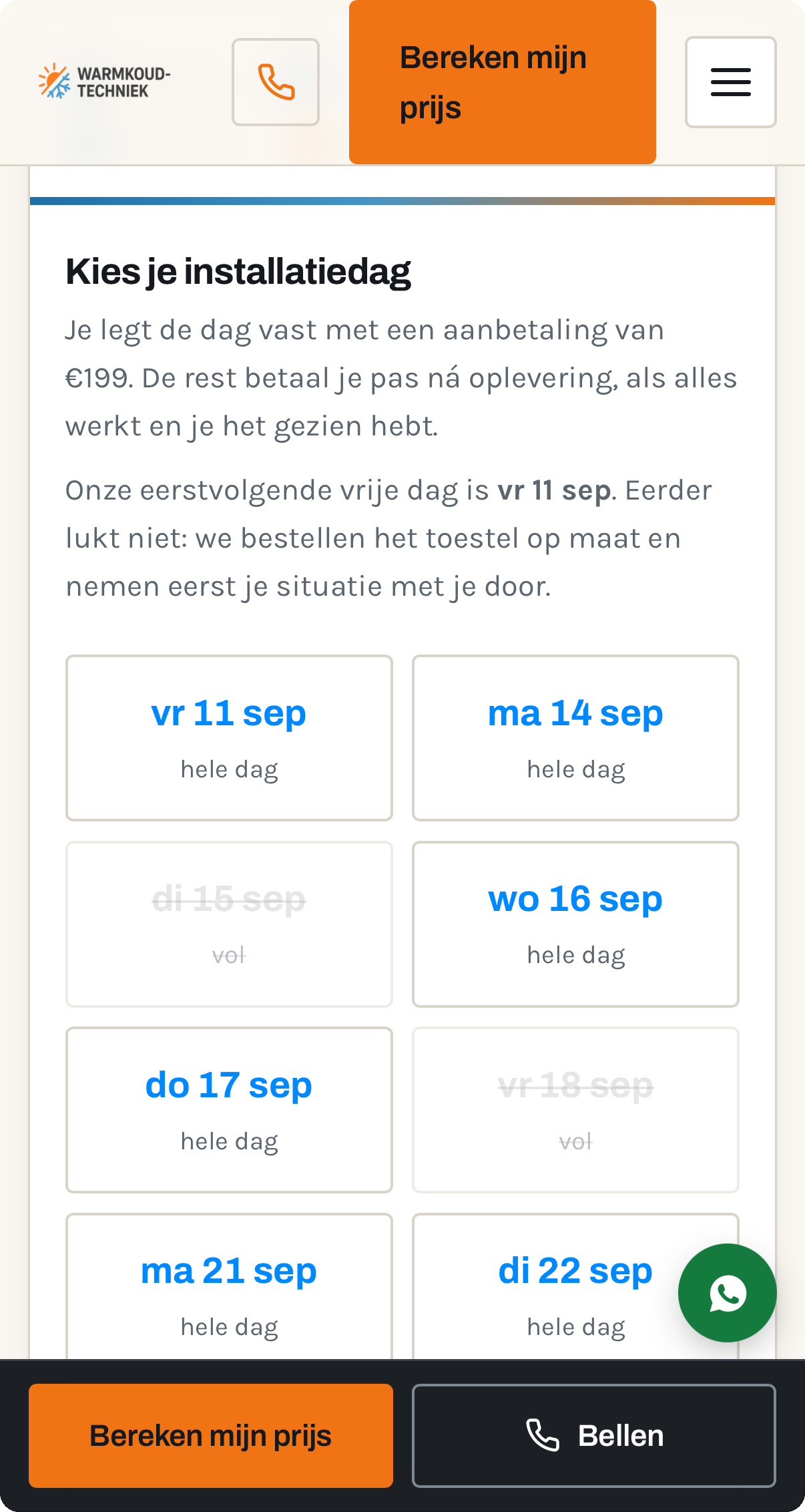
The customer now makes the quote. On his own website they pick their rooms, describe the situation, see a price at step three, and choose an installation day from the days still free. He comes home and the quotes are already there, with a chosen date attached, instead of a stack of notes waiting to be turned into documents.
Notice which step is third. The price does not sit at the end behind a contact form. It appears while the customer is still deciding, because that is the question they rang about in the first place. Putting it last would have rebuilt the phone call in a browser.
Who actually does the work now?
The customer, and it is less work for them than the phone call was. They know their own rooms, their own building and when they are home. Each of those facts used to travel through a conversation, a scrap of paper and an evening at a kitchen table before becoming a price. Now it goes straight in.
That is the sentence I would keep if the rest of this page were deleted. The work did not disappear. It moved to the person who already had the answers, and stopped being relayed by someone standing on a ladder.
Why let them pick the installation day?
Because the alternative is another phone call, and the whole point was to remove those. A date the customer chose themselves is also a date they turn up for. Offering only the days that are genuinely free means the choice is real, which is the difference between a booking and a request.
There is a small courage problem here that has nothing to do with technology. Showing your free days shows how busy you are. Every installer I have discussed this with hesitates at exactly that point, and every one of them got over it within a week of the first booking arriving while they were up a ladder.
Doesn’t showing a price cost you work?
It costs you the wrong work, which is the point. People who were never going to accept that price now find out at step three instead of after an evening of your time. The enquiries that do come through arrive with the situation already described, and they convert far better because the price stopped being a surprise.
The objection underneath is usually different from the one stated. It is not really about competitors seeing your prices; anyone can get a quote from you in ten minutes anyway. It is about giving up the conversation in which you would have explained the price. That conversation still exists, it just happens with someone who has already decided the number is plausible.
When would this be exactly the wrong thing to build?
When there is no repeatable price to show. If every job is negotiated, if the work varies so much that any number would be a lie, or if you sell a handful of jobs a year, a configurator either misleads people or gathers dust. In those cases the price genuinely belongs in a conversation.
I say no to this more often than I build it, and the reasoning is set out here: when this is exactly the wrong thing to build. It is a real answer, not a warm-up before a sales pitch.
What made the difference — the software or the noticing?
The noticing. The build was ordinary: a form, a price rule, a calendar. What made it work was hearing “the phone keeps going” and treating it as a description of a broken chain rather than a complaint about interruptions. Get that wrong and you build a nice quote tool that still needs him to type it.
This is the part of the job that is watching rather than typing, and it is why the useful skill here is not the API but the skill of noticing which problem is real.
The same knot can be untied from the other side, inside a company with a sales office instead of a ladder. That story is here: the same problem approached from the other end.
Marc Herdes, Almere, 4 September 2026.
Does this sound like your company?
Two sentences is enough. You get an honest answer: what I would build, what I would leave alone, and whether it belongs with me or with someone else. A first conversation costs nothing.
How often does your phone interrupt the work?
That number is usually the whole case. Describe what people call you about and I will tell you whether a screen can answer it instead.